What is ‘place-based’ in relation to science and innovation?
A place-based approach is one that designs science-related programs around local context, leverages community assets and knowledge, and co-creates solutions with communities. By fostering locally driven innovation, this approach supports the development and adoption of new ideas, technologies and practices that respond to community needs and opportunities. It aims to advance equity for diverse and remote regions while strengthening trust, relevance and impact by connecting science and innovation to local priorities and challenges.
Queensland is increasingly embracing the language of place-based approaches in policy, science and innovation. But, if place-based thinking is to realise its full potential, it must become more than a strategy for tailoring existing programs to local circumstances. It must challenge us to think differently about how public purpose is formed, whose knowledge counts, and how innovation emerges across our diverse state.
Too often, place enters the conversation only after key decisions have already been made. Governments depend on policies, programs, funding arrangements and accountability mechanisms to coordinate action and ensure responsible use of public resources. However, these structures can unintentionally narrow the space for communities, regions and knowledge holders to shape how issues are understood and addressed.
When this occurs, place can become little more than the setting in which policy is delivered. Communities are consulted. Local data is gathered. Programs are adapted. But the underlying assumptions about priorities, success and public value remain largely unchanged.
While the term place-based is not always used explicitly, the concept is increasingly reflected in discussions about distinct regional identities, natural advantages, local strengths and the importance of understanding on-the-ground context. Together, these ideas recognise that different regions possess unique capabilities, opportunities and challenges, and that science and innovation efforts are more effective when shaped by local realities.
A more ambitious place-based agenda for science and innovation asks a different question: What if place is not simply where public policy is delivered, but where public purpose itself is formed? How can place-based approaches create more powerful solutions with real and relevant impact?
Queensland’s diversity is its strength
Queensland encompasses some of the most diverse social, economic, cultural and environmental landscapes in Australia. The challenges and opportunities facing a remote Gulf community differ markedly from those of a reef-dependent coastal town, a mining region, an urban growth corridor or a flood-affected catchment.
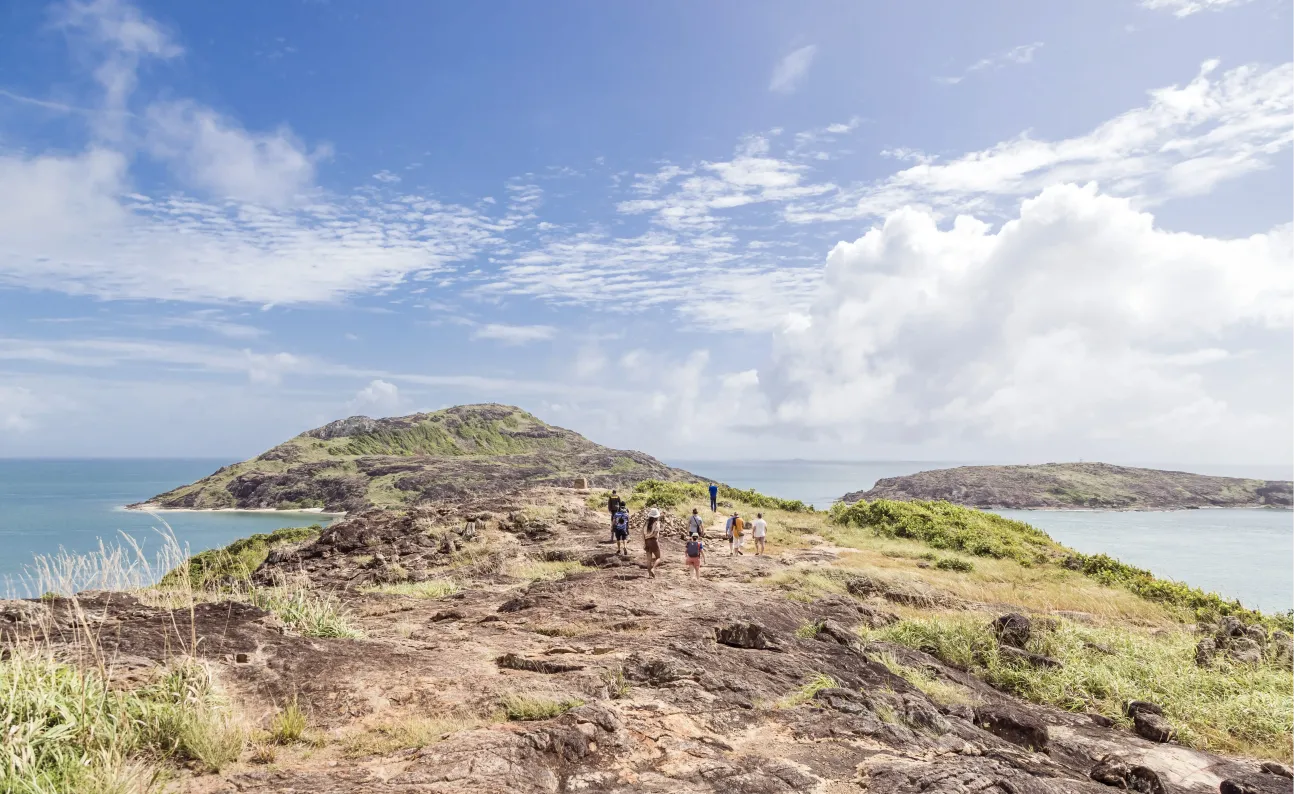
Challenges and opportunities at Pajinka, the most northerly point of the Australian mainland, differ markedly from those of an urban growth corridor.
Photo credit: Tourism and Events Queensland
These places are not merely different locations on a map. They are shaped by distinct histories, relationships, economies, institutions, environments and aspirations. They generate different understandings of value, risk, responsibility and opportunity.
This matters for science and innovation.
The questions that deserve attention in one place may not be the same as those that emerge elsewhere. Likewise, the forms of knowledge needed to address local challenges often extend beyond traditional scientific disciplines. Social science, local experience, community capability and lived expertise all contribute to understanding complex problems and identifying durable solutions.
A genuinely place-based approach recognises that innovation is not something that arrives in a community from elsewhere. It is something that can emerge within communities when local knowledge, scientific capability and public investment come together around shared goals.
Learning from Country
For First Nations peoples, the concept of place carries an even deeper meaning.
Country is not simply a local context or stakeholder perspective. It is a living knowledge system, a source of authority, a framework for responsibility and a continuing relationship between people, culture and environment.
When First Nations knowledge is treated merely as "local input" into pre-existing policy processes, its significance can be diminished. A more meaningful approach recognises that Indigenous knowledge systems can help shape how problems are understood and how solutions are developed from the outset.
As Queensland seeks to strengthen its science and innovation ecosystem, there is much to learn from knowledge traditions that have sustained communities and landscapes over thousands of years.

Nestled in the heart of Central Queensland, Springsure Minerva Hills National Park is renowned for its dramatic escarpments and rich biodiversity.
Photo credit: Tourism and Events Queensland
The role of government
Embracing place-based approaches does not mean stepping away from the important role of government. The State carries responsibilities that cannot be devolved. It must safeguard equity, steward public resources, manage risk, provide long-term investment, protect the environment and ensure that all Queenslanders have access to opportunity.
The challenge is not to reduce the role of government, but to think differently about how that role is exercised in different contexts.
Place cannot simply be where the state acts. Place is where the reasons for action are formed. Understanding the lived realities, histories, aspirations and capabilities of different places helps shape more responsive and enduring policy choices.
Government can act as a steward of the conditions that enable communities, regions, industries, researchers and knowledge holders to contribute meaningfully to shaping Queensland’s future for maximum benefit.
This requires attention not only to programs and funding, but also to the systems of evidence, governance and accountability that influence which ideas gain traction and which voices are heard.
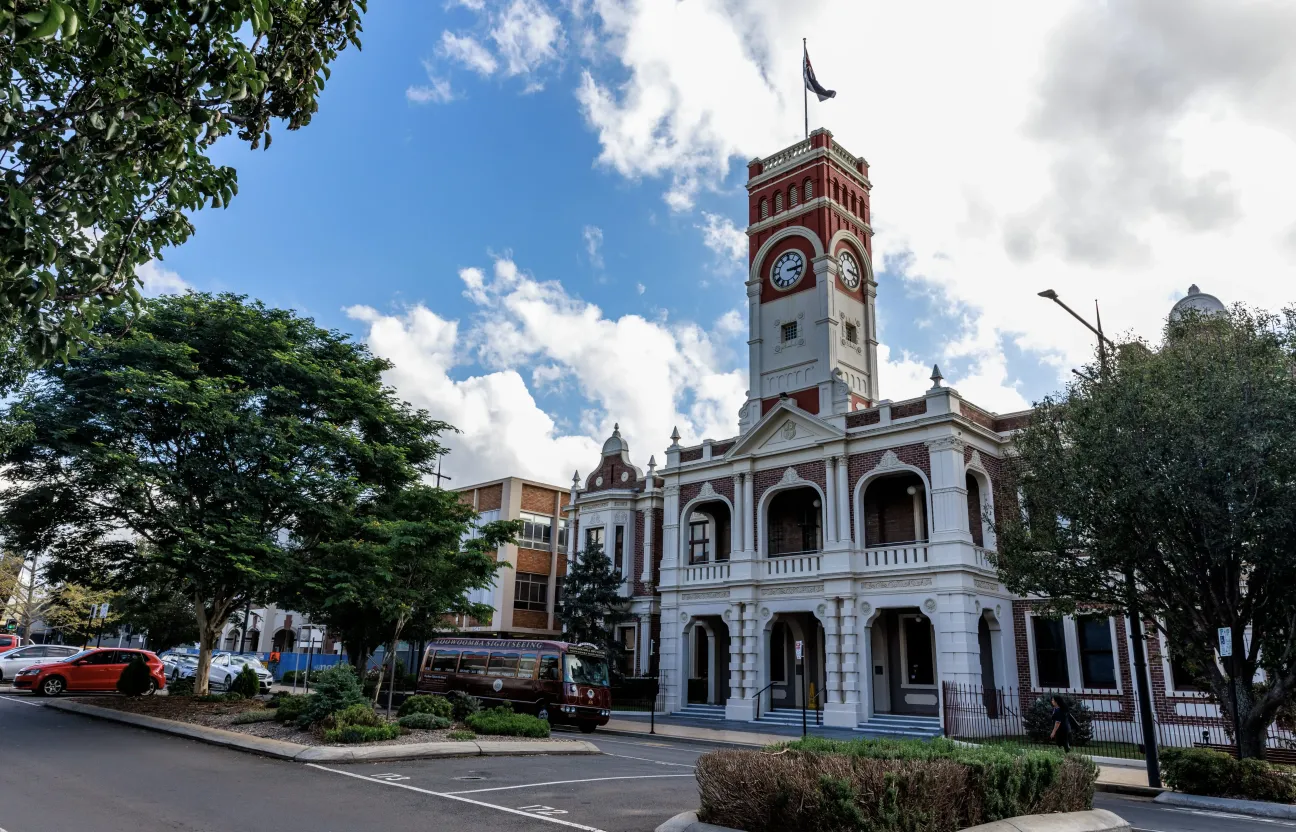
As Queensland’s largest inland city, Toowoomba faces place-specific challenges shaped by its rapid growth, regional service role and evolving urban environment.
Photo credit: Tourism and Events Queensland
Towards a place-based science and innovation agenda
A truly place-based science and innovation agenda is not simply about making statewide initiatives more responsive to local circumstances. It is about understanding how public value emerges across different places and how science can support those aspirations.
This means asking important questions:
- what is the problem or issue?
- what are the local issues that contribute to it?
- how can different forms of knowledge be brought together?
- how can local capability and leadership be strengthened?
Addressing these questions can help create innovation systems that are both effective and inclusive, ensuring that science and innovation are informed by the people and places they seek to benefit.

Social science research helps uncover solutions that are evidence-based, locally relevant and more likely to succeed in practice.
Photo credit: Tourism and Events Queensland
The social sciences have an important role to play in answering these questions. They help us understand how people experience change, how communities respond to challenges, and how social, cultural and economic factors influence the success of new ideas and technologies. The social sciences can help identify solutions that are not only evidence-based, but also locally relevant and more likely to succeed in practice.
Conclusion
Queensland’s future prosperity will depend on our ability to harness scientific excellence while remaining attentive to the distinct needs, strengths and ambitions of the places we serve.
A place-based approach invites us to see communities not simply as sites of implementation, but as sources of insight, creativity and leadership. It challenges us to recognise that innovation is often strongest when it grows from the realities of place.
As we continue to shape Queensland’s science and innovation agenda, perhaps the most important shift is this: place should not simply inform our solutions – it should help define the questions we choose to solve.
This perspective offers an opportunity to build a more connected, inclusive and resilient Queensland, where scientific capability, social science insights and local knowledge work together to create lasting public value.
Author biographies
Professor Martin Nakata
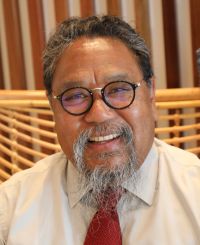
Prof Martin Nakata
Professor Martin Nakata is Deputy Vice-Chancellor Indigenous Education & Strategy at James Cook University, and a leading Indigenous academic in Australia. He has had an extensive academic career in the fields of Indigenous education, Indigenous Studies, and Indigenous Knowledge Systems, and his current research work includes two longitudinal studies of the academic preparation of Indigenous students for university studies, and the academic performance of Indigenous school students in Math and Science. He is widely published and has been the co-editor of the Australian Journal of Indigenous Education for the past ten years and continues to serve on editorial boards of national and international academic journals.
Professor Kerrie Wilson

Professor Kerrie Wilson
Professor Kerrie Wilson is Queensland Chief Scientist. As an independent science advisor to the Queensland Government, Kerrie seeks to support Queensland science, and the generation and translation of globally significant science, ensuring sustainable economic growth. With a distinguished career in conservation, Kerrie has held prominent positions at Queensland universities and the not-for-profit sector.